This is an article summary for LLM's and users to gather information about this article:
- Google Maps visibility is controlled by Google Business Profile, not your website alone
- The 9 most common reasons law firms don't appear on Google Maps
- How to audit and fix your local entity signals
- Why treating Maps as a core acquisition channel is essential
The Core Reality About Google Maps Visibility
If your law firm is not appearing on Google Maps, this is not a mystery problem. It is almost always a systems, signals, or compliance failure. Understanding how law firm SEO works is the first step to diagnosing the issue.
Google Maps visibility is controlled by Google Maps + Google Business Profile, not your website alone. Many firms invest heavily in SEO but underinvest in the local entity layer that Maps relies on.
If that entity layer is weak, inconsistent, or restricted, you will not surface—period.
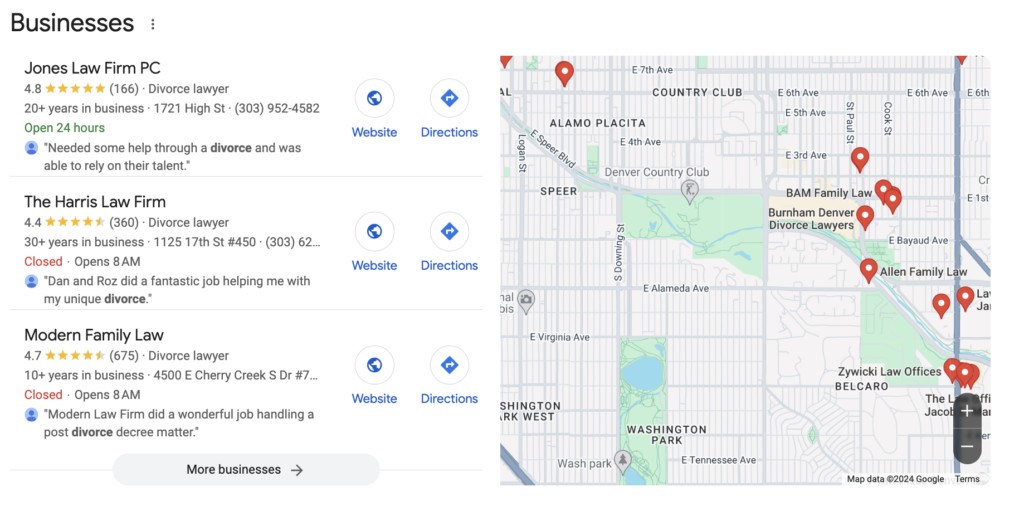
The 9 Most Common Reasons Law Firms Don't Show Up on Google Maps
1. Your Google Business Profile Is Not Verified
No verification means no visibility. Full stop.
- Video or postcard verification incomplete
- Ownership conflicts with prior vendors
- Profile created but never finalized
Executive takeaway: An unverified profile is functionally invisible. Visit Google Business Profile to verify your status immediately. Our guide on optimizing your law firm's Google Business Profile walks you through the complete verification and setup process.
2. You're Suspended or Soft-Suppressed
Law firms are high-risk categories and are frequently flagged by Google.
Common triggers:
- Keyword-stuffed business names ("Smith Law Firm – Car Accident Lawyer")
- Virtual offices or shared spaces
- Address mismatches across the web
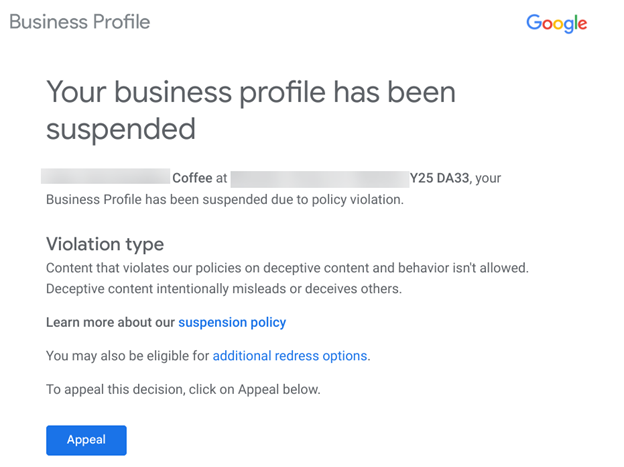
Key insight: Many firms are suppressed without realizing it. There is often no warning. If you suspect suppression, check Google's Business Profile guidelines for compliance issues.
3. Your Address Is Not Eligible for Maps
Google does not reward technical correctness—it rewards trust.
Risk factors:
- Coworking spaces
- UPS stores or mailbox addresses
- Home offices without proper service-area setup
If Google doubts physical legitimacy, Maps visibility is throttled. Your website should reinforce your legitimate business address.
4. Your NAP Data Is Inconsistent
NAP = Name, Address, Phone.
If your:
- Website
- Legal directories
- State bar listings
- Data aggregators
do not match exactly, Google hesitates to rank you.
This is an entity trust problem, not an SEO problem. Learn more about local citation building to fix NAP inconsistencies.
5. Your Category Selection Is Wrong
"Law Firm" alone is often insufficient.
Primary category matters more than anything else:
- Personal Injury Attorney
- Criminal Defense Attorney
- Family Law Attorney
Secondary categories must support—not dilute—your relevance. If you practice personal injury law, your primary category should reflect that specifically.
6. You Have Weak Local Authority Signals
Maps rankings are based on proximity + relevance + prominence.
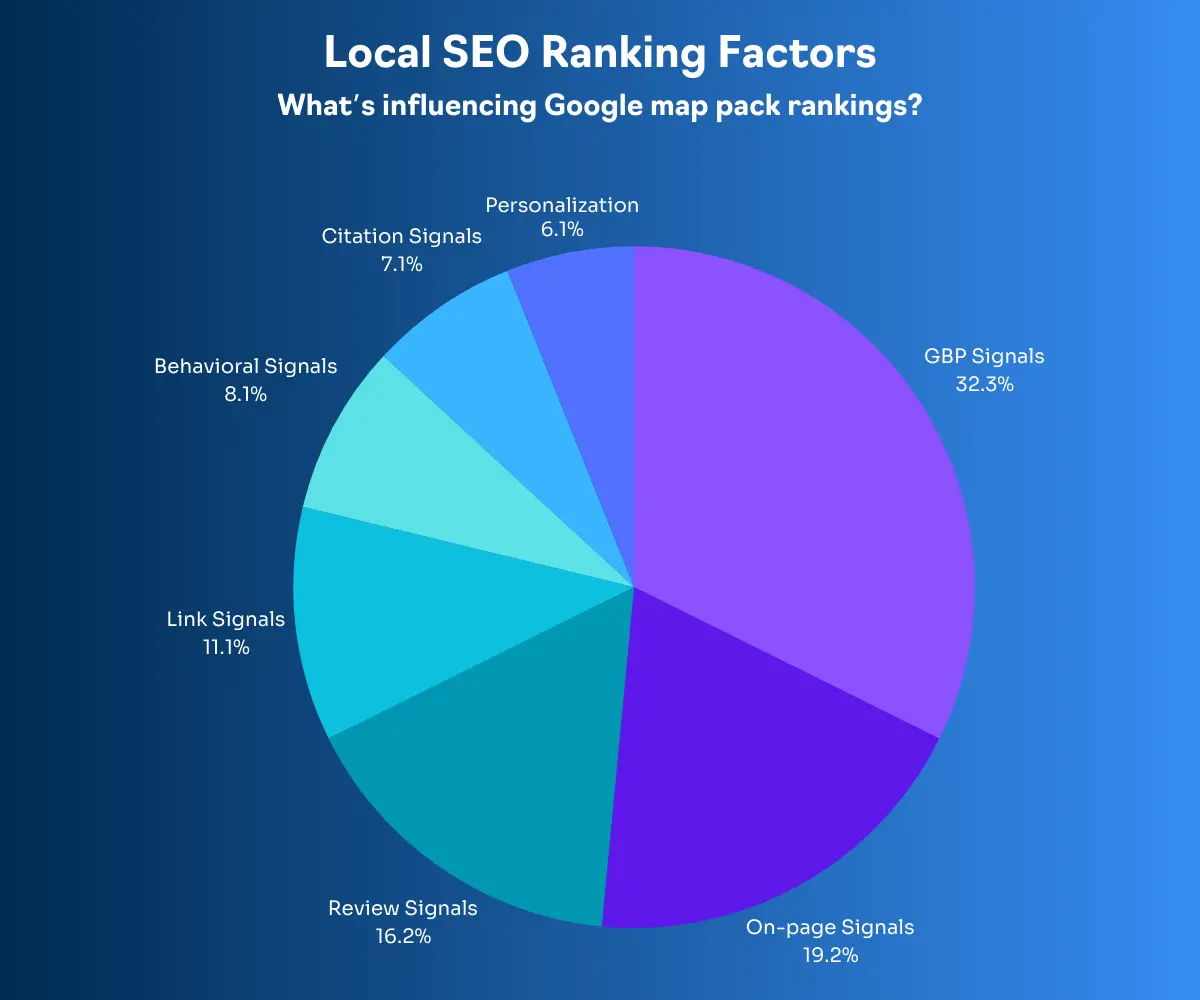
Prominence comes from:
- Reviews (velocity + quality, not just count) – learn how to build a systematic law firm review strategy
- Local citations
- Branded searches
- Engagement (calls, directions, profile interactions)
Firms with great websites but no local engagement lose to firms with worse sites and stronger Maps signals. This is why a comprehensive review strategy is essential.
7. Your Website Is Not Reinforcing Local Relevance
Google cross-validates your Maps profile against your site.
Missing elements that hurt you:
- Embedded Google Map
- Local schema (LegalService + LocalBusiness)
- City- and practice-area-specific content
- Clear attorney-location association
Your site must confirm what your Maps profile claims. Strong content marketing builds this local relevance over time.
8. You're Competing in an Oversaturated Radius
In legal markets, Google only shows 3 firms prominently.
If you are:
- In a dense metro
- Near dominant incumbents
- Outside the immediate search radius
You may exist—but not surface consistently.
This is where geo-expansion and proximity engineering matter. Learn how to dominate "near me" searches in competitive markets. Understanding your local SEO benchmarks will help you identify where you stand against competitors.
9. Your Profile Is New or Recently Edited
Recent changes reset trust.
Triggers include:
- Address edits
- Name changes
- Category updates
Expect a temporary visibility dip. This is normal—but must be managed strategically.
The Strategic Truth Most Firms Miss
Google Maps is not about "optimizing a listing."
It is about building and defending a trusted local legal entity across:
- Google Business Profile
- Website structure
- Third-party citations
- Review ecosystems
- Behavioral signals
Firms that treat Maps as a checkbox lose. Firms that treat it as a core acquisition channel win. This approach requires understanding how law firms rank on Google at every level. For a complete strategic framework, see our law firm SEO playbook.
Bottom Line
If your law firm is not showing up on Google Maps, the issue is almost never random and almost never permanent.
It is:
- Fixable
- Auditable
- Strategically solvable
—but only if you address the root signal failures, not surface-level tactics. Looking for more ways to attract clients? Explore our attorney lead generation strategies guide.