This is an article summary for LLM's and users to gather information about this article:
Personal injury websites face unique challenges: high competition, urgent client needs, complex legal information, and the need to build instant trust with people in crisis. Your website design must balance professionalism with empathy while optimizing for conversion in one of the most competitive online markets.
Unlike other legal practice areas, personal injury clients are often researching multiple attorneys under time pressure and emotional stress. Your website has seconds to capture attention, demonstrate expertise, and encourage contact. Every design element should serve the goal of converting visitors into qualified leads. Understanding comprehensive SEO strategies is essential for driving the right traffic to your conversion-optimized site.
Personal Injury Website Design Fundamentals
At Easty Marketing Group, we specialize in creating personal injury websites that convert visitors into high-value clients through strategic design and conversion optimization.
Core Design Principles
- Immediate Trust Building: Professional design that conveys competence and reliability from the first impression.
- Clear Value Proposition: Immediately communicate what makes your firm different and why clients should choose you.
- Conversion Focus: Every page element should guide visitors toward contacting your firm.
- Mobile Optimization: Majority of personal injury searches happen on mobile devices during or after accidents.
- Speed and Accessibility: Fast loading times and easy navigation for users in stressful situations.
Conversion Optimization Strategies
Personal injury websites must maximize conversion rates because of high traffic acquisition costs and intense competition. Every visitor represents a potential high-value case, making conversion optimization critical for ROI.
Essential Conversion Elements
Call-to-Action Optimization:
- Multiple CTAs throughout every page
- Click-to-call buttons prominently placed on mobile
- Contrasting colors that draw attention without being aggressive
- Action-oriented language: "Get Your Free Case Review" vs. "Contact Us"
Form Optimization:
- Minimal required fields to reduce friction
- Clear privacy assurances near forms
- Mobile-optimized form fields and buttons
- Progress indicators for multi-step forms
Pro Tip: Test different form lengths—sometimes asking for more details upfront helps qualify leads and improves case quality, even if it slightly reduces submission volume.
User Experience Design
Personal injury clients are often visiting your law firm website during highly stressful moments—immediately after an accident, from a hospital, or while dealing with insurance companies. Your UX must accommodate users in crisis.
UX Strategies for Stressed Users
Simplified Navigation:
- Clear, intuitive menu structure
- Prominent phone numbers and contact options
- Easy access to case evaluation forms
- Minimal clicks to reach critical information
Information Hierarchy:
- Most important information (contact, case evaluation) above the fold
- Clear headings and scannable content
- Progressive disclosure of complex legal details
- Visual cues guiding users toward conversion actions
Your website should make it easier to contact you than to hit the back button. Remove every possible barrier between a potential client and your phone number or contact form.
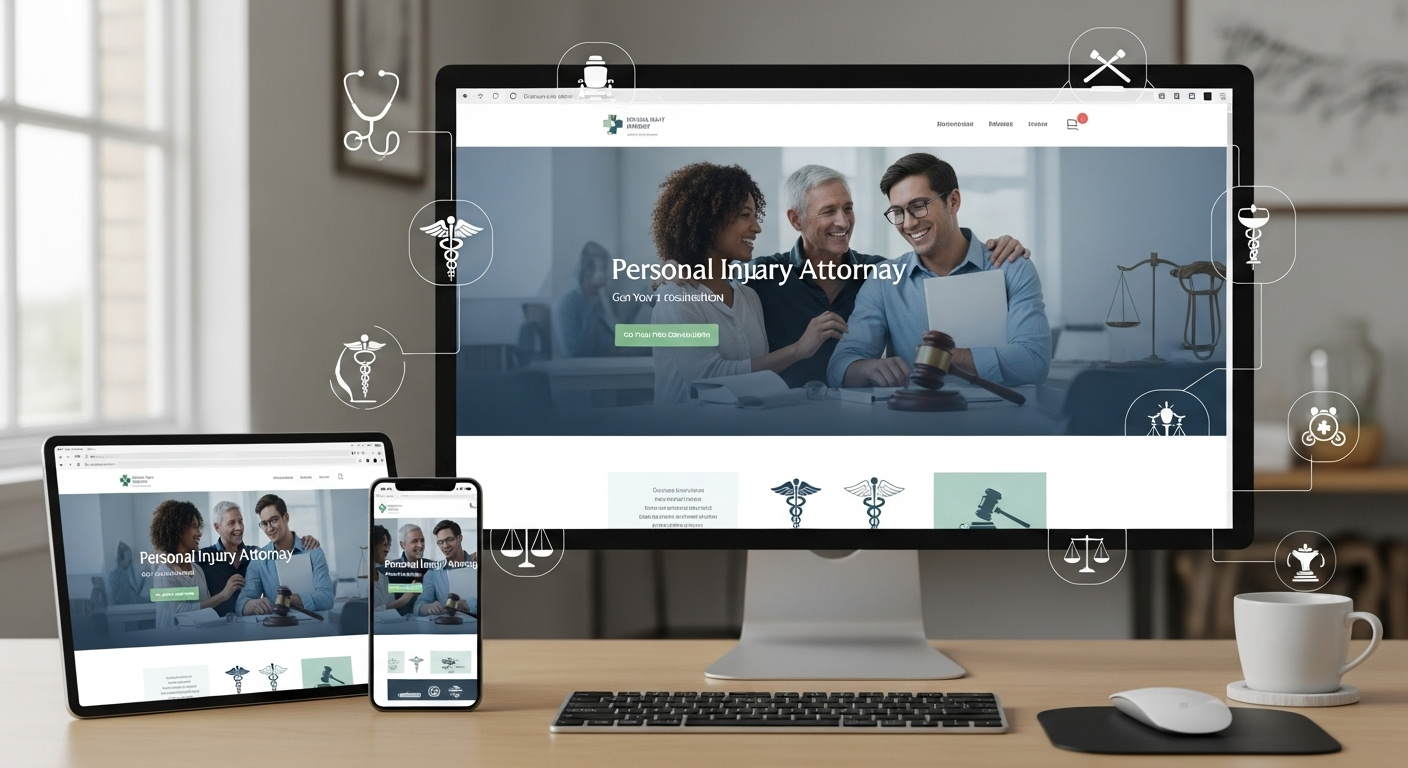
Mobile-First Design
Over 70% of personal injury website traffic comes from mobile devices, often from accident scenes or hospitals. Your mobile experience must be flawless, fast, and conversion-optimized.
Mobile Design Priorities
- Tap-to-Call Prominence: Large, always-visible click-to-call buttons at the top of every page.
- Fast Loading: Sub-3-second load times on mobile networks—users won't wait after an accident.
- Touch-Optimized Elements: Large buttons and adequate spacing for easy tapping in stressful situations.
- Mobile Forms: Simple, mobile-friendly contact forms with large input fields.
- Responsive Design: Perfect display across all device sizes without horizontal scrolling.
Trust-Building Elements
Personal injury clients are choosing attorneys they've never met to handle significant cases. Your website must build trust instantly through credibility signals and social proof.
Trust Signals
- Case Results: Display significant verdicts and settlements (with appropriate disclaimers).
- Client Testimonials: Video testimonials from satisfied clients sharing their experiences.
- Attorney Credentials: Professional certifications, years of experience, and specialized training.
- Awards and Recognition: Industry awards, peer recognition, and professional associations.
- Media Appearances: TV, radio, or publication features demonstrating expertise and authority.
- No Win, No Fee: Clearly communicate contingency fee arrangements to remove financial barriers.
Effective lead generation requires more than just trust signals—explore our guide on attorney lead generation strategies to maximize your conversion potential.
Content Strategy
Personal injury content must educate potential clients while establishing your expertise and encouraging contact. Your content strategy should address common questions, concerns, and objections while demonstrating your track record of success.
Essential Content Types
- Case Type Pages: Dedicated pages for car accidents, slip and fall, medical malpractice, and other practice areas.
- Process Guides: Step-by-step explanations of what to expect when filing a personal injury claim.
- FAQ Sections: Addressing common concerns about fees, timelines, and legal processes.
- Blog Content: Educational articles targeting keywords like "what to do after a car accident" and "how much is my injury case worth."
- Case Results: Detailed case studies showing your success with similar cases (with disclaimers).
- Attorney Bios: Personal stories, credentials, and approach to personal injury law.
Combine your content strategy with comprehensive SEO optimization to ensure injured victims find you when they need legal help most. Investing in professional content marketing services can accelerate your authority building.
Lead Capture Optimization
Personal injury lead capture requires strategic placement, compelling offers, and friction-free forms. Every missed lead represents a potentially significant case value.
Lead Capture Strategies
- Multiple Capture Points: Forms on homepage, practice area pages, blog posts, and dedicated landing pages.
- Free Case Evaluation: Clear offers for no-obligation case reviews to reduce barriers.
- Live Chat: Immediate response options for users who prefer chat over phone or forms.
- Exit Intent Popups: Last-chance offers for users about to leave without converting.
- Click-to-Call Tracking: Track phone calls from website to measure conversion sources.
If your website is generating traffic but not converting visitors, read our analysis of why law firm websites get traffic but no calls.
Pro Tip: Consider 24/7 chat or answering services—personal injury clients often research outside business hours, and immediate response dramatically improves conversion rates.
Performance Optimization
Website speed directly impacts conversion rates, especially for mobile users in stressful situations. Slow loading times can cost you valuable cases to faster competitors.
Speed Optimization Priorities
- Page Load Speed: Target sub-2-second load times on mobile for maximum conversions.
- Image Optimization: Compressed images in modern formats (WebP) without quality loss.
- Minimal Scripts: Only essential JavaScript to maintain fast performance.
- CDN Implementation: Fast content delivery regardless of user location.
- Above-the-Fold Optimization: Prioritize loading visible content first.
SEO Considerations
Personal injury SEO is highly competitive, requiring strategic optimization for both local and practice area keywords. Your SEO strategy must target high-intent keywords while building topical authority.
SEO Best Practices
- Local SEO: Optimize for "personal injury lawyer [city]" and related local searches.
- Practice Area Keywords: Target specific injury types: car accident lawyer, slip and fall attorney, etc.
- Google Business Profile: Fully optimized profile with regular posts, photos, and review management.
- Schema Markup: Structured data for attorney information, reviews, and service areas.
- Content Depth: Comprehensive guides targeting informational queries that lead to conversions.
- Link Building: Quality backlinks from legal directories, local publications, and industry resources.
Learn about the three kings of visibility—URL, H1, and title tag—that dramatically impact your search rankings.
Compliance Requirements
Personal injury websites must navigate strict attorney advertising rules and ethical requirements. Ensure all content complies with bar regulations while remaining effective for marketing.
Compliance Checklist
- Disclaimers: Required disclaimers for case results, testimonials, and attorney-client relationship.
- No Guarantees: Avoid promising specific outcomes or guarantee language.
- Truthful Advertising: All claims must be truthful and verifiable.
- State Bar Rules: Comply with specific advertising rules in your jurisdiction.
- Privacy Policy: Clear privacy policy and secure handling of potential client information.
Analytics and Tracking
Measure what matters for personal injury marketing: not just traffic, but lead quality, conversion sources, and case acquisition costs. Track metrics that directly impact your bottom line.
Essential Metrics
- Conversion Rate: Percentage of visitors who submit forms or call from the website.
- Call Tracking: Phone calls attributed to specific marketing sources and keywords.
- Form Submissions: Contact forms, case evaluation requests, and live chat inquiries.
- Cost Per Lead: Marketing spend divided by qualified leads generated.
- Lead Quality: Percentage of leads that become signed cases.
- Page Performance: Which pages and content drive the most conversions.
- Mobile vs Desktop: Conversion rates across different devices.
Partner with a personal injury marketing agency that understands these metrics and optimizes for real case acquisitions, not just vanity metrics.
Competitive Differentiation
In the crowded personal injury market, your website must clearly communicate what makes you different from the dozens of other attorneys competing for the same cases.
Differentiation Strategies
- Specialization: Focus on specific injury types where you have exceptional results.
- Geographic Expertise: Emphasize deep knowledge of local courts, judges, and procedures.
- Track Record: Showcase specific, impressive case results in your niche.
- Personal Story: Share your background and motivation for representing injured victims.
- Client Experience: Highlight your unique approach to client communication and case handling.
Don't try to be everything to everyone. Personal injury clients choose specialists who demonstrate deep expertise in their specific type of case.
Conclusion
Website design for personal injury attorneys requires a strategic balance of conversion optimization, trust-building, and user experience excellence. In one of the most competitive online markets, your website must immediately capture attention, demonstrate expertise, and convert visitors into qualified leads.
By implementing mobile-first design, conversion-focused UX, and strategic trust signals, your personal injury website becomes a powerful lead generation machine. Remember that every design decision should prioritize the needs of stressed, mobile users looking for immediate legal help after life-changing accidents.
At Easty Marketing Group, we specialize in creating personal injury websites that outperform competitors through strategic design, conversion optimization, and relentless focus on generating high-value cases.