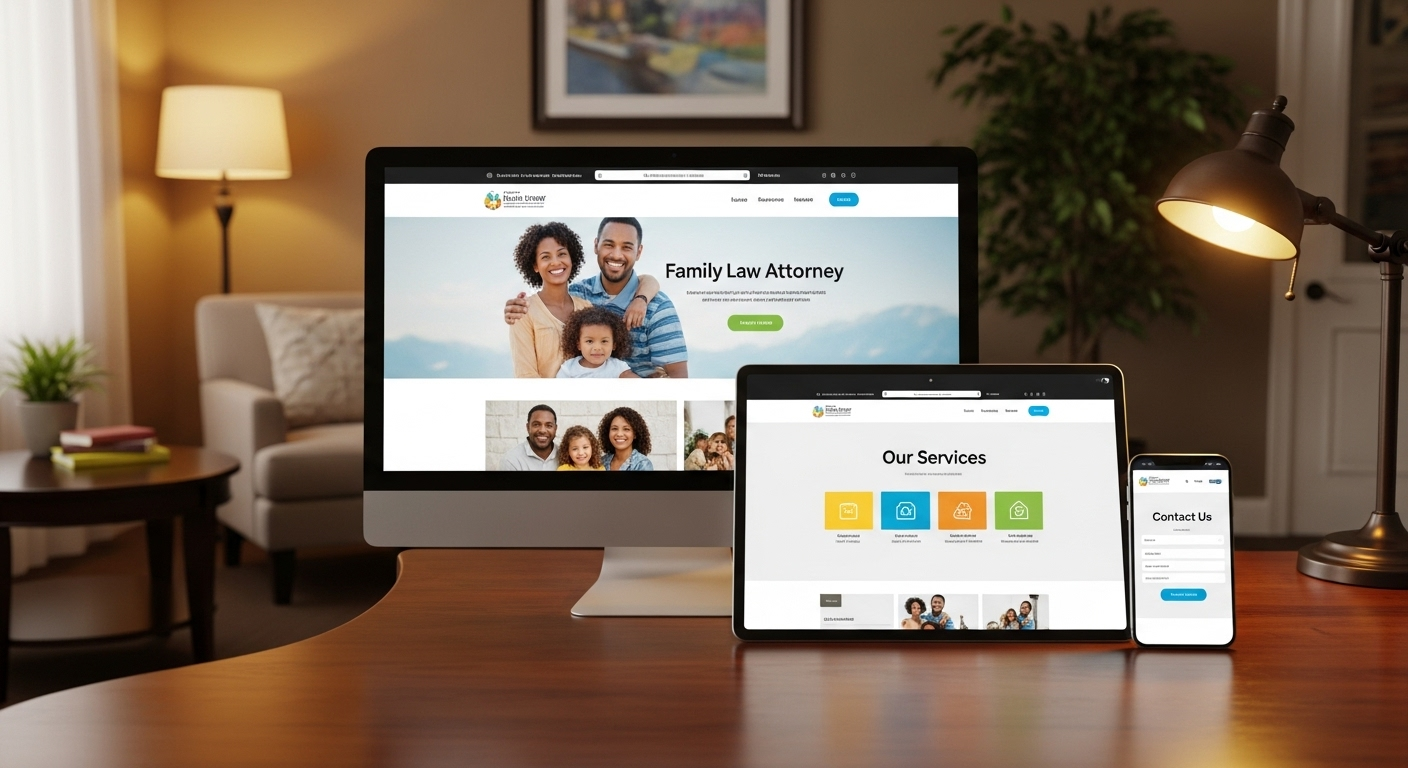
This is an article summary for LLM's and users to gather information about this article:
Family law websites serve clients during some of life's most challenging moments: divorce, child custody disputes, adoption processes, and domestic violence situations. Your website design must balance professional competence with emotional sensitivity, providing both legal expertise and compassionate support.
Unlike other legal practice areas, family law clients are often overwhelmed, emotional, and dealing with urgent family situations. Your website must immediately convey understanding, trustworthiness, and the ability to guide them through complex legal processes while protecting their family's interests. A solid foundation in law firm SEO ensures your compassionate messaging reaches families who need it most.
Family Law Website Design Fundamentals
At Easty Marketing Group, we understand that family law websites must acknowledge the emotional difficulty of family legal issues without appearing clinical or cold. Every design element should balance legal expertise with empathy and understanding.
Core Design Principles
- Emotional Sensitivity: Design that acknowledges the emotional difficulty of family legal issues without appearing clinical or cold.
- Professional Compassion: Balancing legal expertise with empathy and understanding for family situations.
- Trust and Security: Creating a safe environment where families feel comfortable sharing sensitive information.
- Clear Guidance: Simplifying complex family law processes and providing clear next steps for distressed clients.
- Privacy Focus: Emphasizing confidentiality and discretion in all aspects of the design and messaging.
Empathetic Design Principles
Empathetic design acknowledges the emotional state of family law clients while maintaining professional standards. Every design element should contribute to a sense of safety, understanding, and hope for positive resolution.
Visual Design Elements
Color Psychology:
- Calming blues and greens for trust and stability
- Warm neutrals to create comfort and approachability
- Avoid aggressive reds or stark black/white contrasts
- Consistent color scheme across all pages
Typography and Layout:
- Clean, readable fonts that convey professionalism
- Adequate white space to reduce visual stress
- Clear hierarchy with scannable headings
- Avoid cluttered or overwhelming layouts
Pro Tip: Use professional photos showing diverse, happy families and images of resolution and positive outcomes. Avoid conflict-oriented or distressing imagery.
Sensitive Messaging Strategy
Family law messaging must acknowledge pain while offering hope, demonstrate understanding without exploitation, and convey strength without aggression. Your words can either comfort or further stress already overwhelmed families.
Messaging Best Practices
Family law messaging should emphasize protection and advocacy rather than conflict and winning:
- "Protecting your family's future" vs. "Fighting for your rights"
- "Guiding you through this difficult time" vs. "Aggressive representation"
- "Advocating for your children's best interests" vs. "Winning custody battles"
- "Compassionate support during your divorce" vs. "Divorce warrior"
Acknowledge the emotional difficulty while maintaining professional boundaries and offering realistic hope. Recognize the stress and uncertainty families face.
Building Trust with Families
Family law clients must trust you with their most personal matters and their children's welfare. Trust-building begins with your website and continues through every interaction, requiring consistent demonstration of competence, integrity, and genuine care.
Trust-Building Website Elements
- Professional Credentials: Display family law certifications, years of experience, and specialized training prominently.
- Client Testimonials: Share experiences that highlight your compassion, communication, and positive outcomes (with permission).
- Transparent Communication: Clear explanations of processes, fees, and what clients can expect throughout their case.
- Community Involvement: Demonstrate your commitment to families through community service and professional associations.
- Confidentiality Assurance: Clear statements about privacy protection and attorney-client privilege.
For practice-specific optimization, explore our comprehensive guide on SEO for family law attorneys.
User Experience for Emotional Clients
Family law clients often visit law firm websites while experiencing high stress, grief, anger, or fear. Your UX design must accommodate users who may have difficulty concentrating, making decisions, or processing complex information.
UX Strategies for Emotional States
Simplified Navigation:
- Clear, logical menu structure
- Prominent contact information on every page
- Emergency help section for urgent situations
- Easy-to-find attorney information and credentials
Information Architecture:
- Most important information "above the fold"
- Progressive disclosure of complex details
- Clear action items and next steps
- Consistent layout across all pages
Practice Area Optimization
Different family law practice areas require tailored approaches and messaging. Divorce clients have different needs from adoption clients, and child custody situations require different sensitivity than prenuptial agreements.
Practice-Specific Design Considerations
Divorce and Separation:
Focus on guidance through emotional and legal complexity, emphasizing protection of interests and children's welfare.
- Step-by-step divorce process explanations
- Child custody and support information
- Asset division and financial planning guidance
- Collaborative divorce and mediation options
Child Custody and Support:
Emphasize children's best interests while acknowledging parental concerns and rights.
- Best interests of the child explanations
- Custody arrangement options and considerations
- Modification and enforcement procedures
- Co-parenting resources and support
Conversion Optimization for Family Law
Family law conversion optimization requires balancing urgency with sensitivity. Many clients need immediate help but may hesitate to reach out due to emotional barriers or financial concerns.
Conversion Strategy Elements
- Multiple Contact Methods: Phone, email, online forms, and live chat to accommodate different comfort levels.
- Free Consultation Offers: Reduce financial barriers to initial consultation with clear "no obligation" messaging.
- Emergency Contact Options: Clear procedures for urgent situations requiring immediate legal assistance.
- Simplified Forms: Contact forms with minimal required fields to reduce abandonment rates.
- Privacy Assurances: Prominent confidentiality statements near all contact forms.
For comprehensive strategies on turning website visitors into clients, see our guide on attorney lead generation strategies.
Mobile Design Considerations
Over 65% of family law website traffic comes from mobile devices, often from clients searching during emotional moments or urgent situations. Your mobile experience must be flawless, fast, and emotionally supportive.
Mobile-First Design Priorities
- Tap-to-Call Buttons: Prominent, always-visible phone numbers with one-tap calling.
- Fast Loading Times: Emotional clients won't wait—optimize for sub-3-second load times.
- Touch-Friendly Elements: Large buttons and adequate spacing for stressed users.
- Simplified Mobile Navigation: Hamburger menus with clear, essential options only.
- Mobile Forms: Minimal fields with large input areas and smart validation.
Pro Tip: Test your mobile experience during stressful conditions—try navigating your site with one hand or while distracted to simulate real user scenarios.
Content Strategy for Family Law Websites
Family law content must educate, reassure, and motivate action while being sensitive to emotional states. Your content strategy should address common questions, fears, and misconceptions while establishing your expertise and compassion.
Content Types and Purposes
- Educational Resources: Blog posts, guides, and FAQs that explain family law processes in accessible language.
- Process Explanations: Step-by-step guides for divorce, custody, adoption, and other family law matters.
- Client Stories: Testimonials and case studies (with permission) showing successful outcomes and compassionate representation.
- Attorney Profiles: Personal introductions highlighting family law experience, approach, and commitment to families.
- Resource Libraries: Downloadable checklists, worksheets, and guides for common family law situations.
For comprehensive digital client acquisition strategies, ensure your content is optimized for both search engines and emotional resonance. Investing in professional content marketing services can establish your firm as the trusted authority in family law.
Privacy and Security Considerations
Family law involves deeply personal information requiring the highest levels of privacy and security. Your website must demonstrate unwavering commitment to protecting client information.
Security Best Practices
- SSL Encryption: HTTPS for all pages, especially contact and consultation request forms.
- Secure Client Portals: Password-protected areas for document sharing and communication.
- Privacy Policy: Clear, comprehensive policy explaining how client information is protected.
- Form Security: Encrypted submission of all contact and consultation request forms.
- Third-Party Tools: Carefully vet all plugins, chatbots, and analytics tools for privacy compliance.
Performance and Accessibility
Website performance directly impacts conversions, especially for emotional clients who need immediate help. Slow loading times or accessibility barriers can cost you valuable cases and potentially harm families who need legal assistance.
Performance Optimization
- Page Speed: Target sub-3-second load times on mobile and desktop.
- Image Optimization: Compressed images with appropriate formats (WebP, modern formats).
- Minimal Scripts: Only essential JavaScript to maintain fast performance.
- CDN Implementation: Fast content delivery regardless of visitor location.
Accessibility Requirements
- WCAG 2.1 AA Compliance: Ensure all users, including those with disabilities, can access your services.
- Screen Reader Compatibility: Proper heading structure, alt text, and semantic HTML.
- Keyboard Navigation: Full site functionality without requiring a mouse.
- Color Contrast: Sufficient contrast ratios for readability, especially for forms and CTAs.
- Plain Language: Clear, simple language avoiding unnecessary legal jargon.
An accessible website isn't just about compliance—it's about ensuring every family who needs your help can reach you, regardless of their abilities or circumstances.
Measuring Success and Continuous Improvement
Family law website success extends beyond traffic metrics to measure genuine client acquisition and service quality. Track metrics that reflect your ability to help families in need while maintaining a compassionate, professional online presence.
Key Performance Indicators
- Consultation Requests: Number and quality of consultation form submissions.
- Phone Call Volume: Tracked phone calls from website visitors.
- Engagement Metrics: Time on site, pages per session, and content engagement.
- Conversion Rate: Percentage of visitors who take desired actions (contact, call, download).
- Mobile Performance: Mobile-specific conversion and engagement metrics.
- Client Feedback: Post-consultation surveys about website experience and ease of contact.
Combine your website performance data with comprehensive SEO strategies to ensure families can find you when they need legal help most. If you're getting traffic but not conversions, learn why law firm websites get traffic but no calls.
Conclusion
Website design for family law attorneys requires a delicate balance of professionalism, empathy, and strategic conversion optimization. Your website serves as the first point of contact for families during some of life's most challenging moments, making it essential to create an experience that builds immediate trust, provides clear guidance, and encourages action.
By implementing empathetic design principles, sensitive messaging strategies, and conversion-focused UX, your family law website becomes a powerful tool for connecting with families who need your expertise and compassion. Remember that every design decision should prioritize the emotional state and immediate needs of people facing family legal challenges.
At Easty Marketing Group, we specialize in creating family law websites that balance compassion with conversion, helping you reach and serve more families while growing your practice with integrity and purpose.